
Guide
Choosing the right blasting media
Pressure gets the attention, but the media does the work. Here is what the different types actually do — and when to use which.
If you read one thing
Crushed glass is the all-rounder that handles most paint and rust. Glass beads give a clean matt finish in a cabinet, aluminium oxide is the hard, fast choice that survives many cycles, and soda is the only genuinely gentle option for thin panels and chrome. The rule behind it all: match the media to the substrate — never harder than it can take. And ordinary quartz sand is not an option: it is effectively banned in Norway because of the silicosis risk.
Updated 31 August 2026
Why the choice decides the result
Two operators with the same cabinet and the same pressure can get completely different results — one strips the surface clean in a single pass, the other polishes the paint shiny or digs into the base material. The difference is almost always the media.
Three properties decide: hardness (can it cut the coating without cutting the substrate?), shape (angular grains cut, round beads peen and smooth) and grain size (coarse removes fast and leaves a coarse profile, fine gives an even, smooth surface).
The rule of thumb is simple: choose media for the substrate, never for the coating alone. A media significantly harder than the substrate will mark it.
Matching media to substrate
| Car panels and thin sheet steel | First choice: fine crushed glass, preferably wet, low pressure · Avoid: steel grit and coarse garnet |
|---|---|
| Structural steel and mill scale | First choice: garnet or aluminium oxide, medium to coarse · Avoid: soda and walnut — too weak |
| Aluminium and light alloys | First choice: soda, or fine glass/glass beads at low pressure · Avoid: anything ferrous (rust contamination) and coarse garnet |
| Chrome and polished surfaces | First choice: soda · Avoid: every hard media |
| Engine parts in a cabinet | First choice: glass beads for finish, aluminium oxide for coke and burnt-on residue · Watch out for: residue in oil and water galleries — clean thoroughly afterwards |
| Brick, render and concrete surfaces | First choice: fine glass, wet and at low pressure · Avoid: steel, coarse garnet and high pressure |
| Wood | First choice: fine glass or walnut shell, very low pressure · Avoid: anything coarse |
| Fibreglass and composites | First choice: soda or very fine glass, low pressure · Avoid: garnet and steel grit |
| Concrete, exposing the aggregate | First choice: coarse glass or garnet · Avoid: soda — no cut |
Why not sand?
The name "sandblasting" has stuck, but ordinary sand has no place in any modern blasting setup. Quartz sand contains free crystalline silica, and the dust created when the grains shatter causes silicosis — a serious, incurable lung disease. In Norway it is therefore effectively prohibited to blast with sand containing more than one percent free quartz, and has been for decades.
All the media below are silica-free alternatives. The fact that crushed glass is made of silicates confuses some — but glass is amorphous, not crystalline, and does not release the dangerous quartz dust.
Hardness — media against substrate (Mohs scale)
| Sodium bicarbonate (soda) | 2.5 — softer than aluminium, cannot cut metal |
|---|---|
| Aluminium (substrate) | 2.5–3 |
| Walnut shell | 3–4 — organic and gentle |
| Mild steel (substrate) | 4–4.5 |
| Crushed glass / glass beads | approx. 6 — the all-rounder |
| Garnet | 7.5–8 — fast, low dust |
| Steel grit / steel shot | 7–8 — heavy industry, recycled many times |
| Aluminium oxide (corundum) | 9 — hardest of the common media |
Crushed glass — the all-rounder
What it is: crushed, recycled glass, graded by grain size.
What it does: angular grains that cut efficiently through paint, rust and old coatings at moderate pressure, leaving a clean surface with a good anchor profile for new coating.
Suits: most things — bodywork, steel structures, trailers, rims, machine parts. If you are unsure and the substrate is steel, crushed glass is usually the right starting point.
Watch out for: the grains shatter on impact, so in open blasting it is effectively single-use. In a recycling cabinet it breaks down faster than aluminium oxide and garnet.
Glass beads — finish, not removal
What it is: small, round beads of glass.
What it does: round beads do not cut — they peen. The result is an even, satin-matt surface with hardly any material removed — and the peening packs the surface slightly, an effect industry uses on purpose (shot peening) because it makes parts more resistant to fatigue. The beads survive many cycles in a recycling cabinet.
Suits: cleaning and finishing in a cabinet — engine parts, aluminium, stainless, tools. The default when the goal is an as-new look rather than heavy removal.
Watch out for: if progress is slow, the temptation is to raise the pressure — which just shatters the beads faster instead of working faster. If you need real removal, cut first with an angular media and finish with beads.
Aluminium oxide (corundum) — hard and fast
What it is: synthetic aluminium oxide — known in the trade as corundum — close to the top of the hardness scale among standard materials.
What it does: cuts fast and aggressively, leaves an etched profile, and survives a great many cabinet cycles before wearing out. That is why it is the workhorse in many blast cabinets.
Suits: hard coatings, mill scale, rust on solid steel, and keying surfaces before paint, coating or bonding. Where glass gives up, aluminium oxide keeps going.
Watch out for: too hard for thin panels, aluminium you want to preserve, and anything that cannot take marks. In soft metals, hard grains can also lodge in the surface — invisible embedment that later ruins paint or bonding, and the reason aluminium gets glass or soda instead. It puts a matt profile in most things — that is the point, but only when you want it.
Garnet — fast and low-dust
What it is: a naturally occurring, dense mineral.
What it does: harder and denser than glass, so it cuts faster and gives an even, well-defined profile. Generates little dust, and can be recycled several times in closed systems. When a coating system specifies a blast profile, garnet is often what the datasheet assumes.
Suits: thick industrial coatings, mill scale and structural steel with profile requirements.
Watch out for: more expensive per kilo than glass, and too aggressive for thin sheet and soft substrates.
Soda — the gentle exception
What it is: blast-grade sodium bicarbonate — coarse-grained "baking soda".
What it does: the crystals shatter on impact, and the shattering is what lifts the coating. Because soda is softer than aluminium, it physically cannot cut metal: the paint goes, the substrate stays untouched. It degreases as it works.
Suits: chrome, polished aluminium, thin panels, carburettors, and anything where the substrate is worth more than your time.
Watch out for: slow and single-use, and it leaves no anchor profile — if the surface is to be painted afterwards it needs separate keying. Soda is water-soluble, so a thorough rinse removes it completely — but it MUST happen before coating, and the runoff is alkaline — keep it away from plants.
Steel, walnut and plastic — the specialists
Steel grit and steel shot are heavy industry's media: extremely durable and economical in large closed systems where they are recycled hundreds of times. They demand a completely dry system — moisture rusts both media and machine. Grit cuts, shot peens.
Walnut shell and other organic media are soft and gentle — wood, composites and light alloys clean up without a trace. They absorb moisture, so store the sacks dry; a clumped organic media has lost most of its effect. A bonus: the shells soak up oil and grease, so dirty engine parts degrease as they blast. Plastic media are used for stripping paint and powder coat where the substrate must not be touched at all — typically composites and parts going straight back into service.
Count the price per cycle, not per sack
The sack price lies about what a blasting media actually costs, because the media live very different lives: aluminium oxide survives a great many cabinet cycles — the grains fracture and expose fresh sharp edges instead of going blunt. Glass beads manage a good number of rounds at the right pressure. Crushed glass breaks down faster, and soda and organic media are in practice single-use.
So divide the sack price by the cycles the media realistically gives in your equipment, and the sums often flip: the most expensive media to buy can be the cheapest to run — and vice versa. In open blasting with no recovery everything is single-use, and cheap one-shot media like crushed glass win.
Dry cabinet or wet blasting?
In a dry blast cabinet the media is recycled automatically, the dust is captured by extraction, and you choose the medium freely per job — glass beads for finish, aluminium oxide for removal. It is the most flexible workshop solution.
Wet blasting mixes the media with water. The water binds the dust, cushions the impact and produces a dense, even, characteristically fine surface — especially on aluminium and other light alloys. The process is gentler than dry blasting with the same media, and parts come out clean and degreased. The flip side: steel parts must be dried and protected promptly afterwards, or flash rust arrives before the coffee is poured.
Don't forget the air
Blasting is among the most air-hungry jobs in a workshop, and it is the nozzle that decides consumption — the larger the bore, the more air, and consumption climbs quickly as the nozzle wears. An undersized compressor means falling pressure, uneven results and long pauses.
So check the blasting equipment's stated air requirement against the compressor's actual delivery (FAD) at working pressure — not against the motor rating. And remember a water separator: moist air clumps the media and ruins the result.
Not sure what your job needs?
Tell us what you are cleaning and what the substrate is, and we will help you choose both media and equipment.
Contact usThe equipment this is about
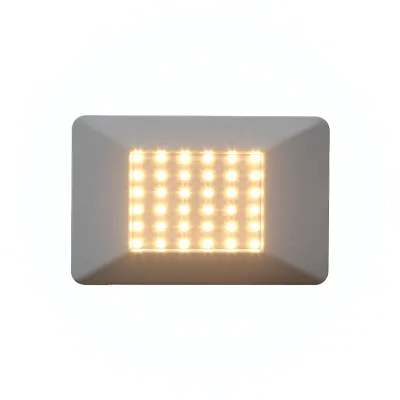
SKU AQAQUABLAST-ADDITIONAL-LIGHTING
Additional lighting
Built-in LED lighting illuminates the cabinet interior during operation — improves visibility of hard-to-reach areas and reduces eye strain during extended cleaning sessions.
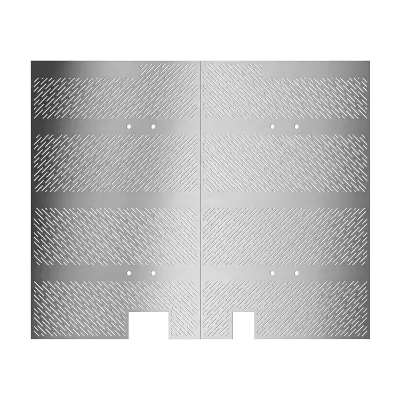
SKU AQAQUABLAST-FINE-MESH
Fine mesh
3×40 mm stainless steel mesh — prevents small parts and components from falling through during cleaning. Fits all LITE and STANDARD models.
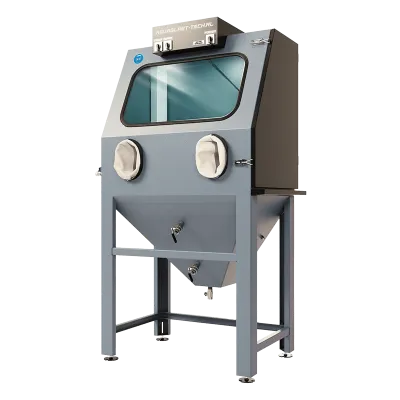
SKU AQUL600
Aquablast LITE 600 – mini wet blasting cabinet
Compact cabinet for smaller garages and workshops. Suited to brake calipers, turbochargers and cylinder heads — gentle cleaning without damaging the surface. Manufactured in Poland.
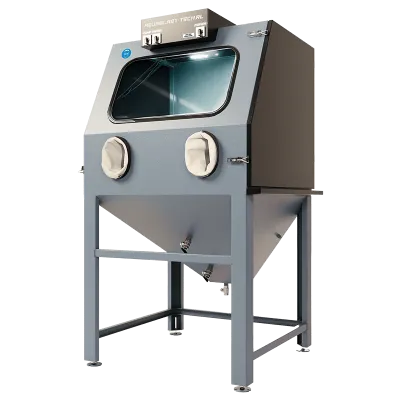
SKU AQAQUABLAST-LITE-900
Aquablast LITE 900 – compact wet blasting cabinet
Built for busy workshops, motorsport teams and service centres — cleans larger parts including engine blocks, intake manifolds and gearbox housings without affecting surface quality. Manufactured in Poland.
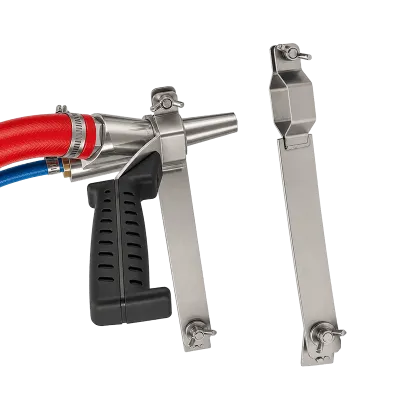
SKU AQAQUABLAST-PISTOL-HOLDER
Pistol holder
Welded directly to the chamber wall between the gloves — keeps the gun secure and ready, and frees up your hands when not blasting.
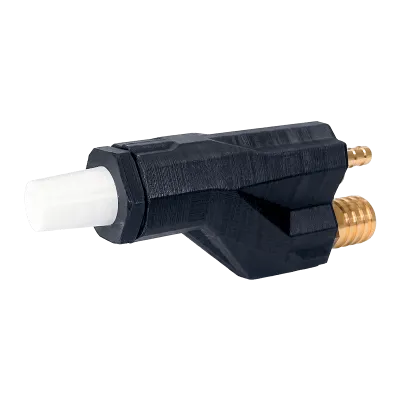
SKU AQAQUABLAST-PLASTIC-PISTOL
Plastic pistol with ceramic nozzles
Plastic blasting gun with ceramic nozzles — included with every machine as standard.
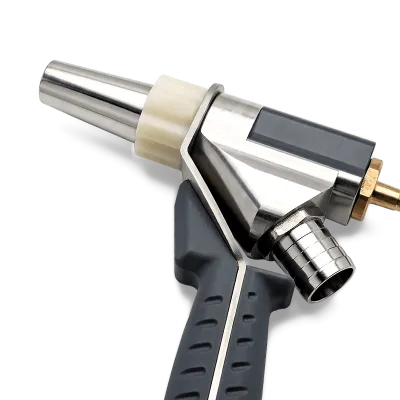
SKU AQAQUABLAST-PRO-GUN
Aquablast PRO Gun
Ergonomic blasting gun with aluminium body and stainless steel nozzles — three interchangeable nozzle sizes (8, 10, 12 mm), working pressure 5–8 atm. Air and media flow is configured to match your compressor before delivery.
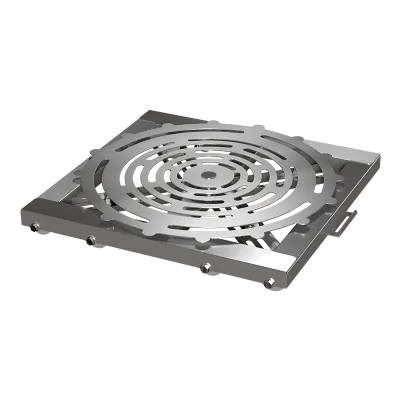
SKU AQAQUABLAST-ROTARY-TABLE
Rotary table
Stainless steel rotating platform for the cabinet working grille — two-part design with a fixed base and rotating top plate. Provides access to all sides of the part without repositioning. Fits all LITE and STANDARD models.
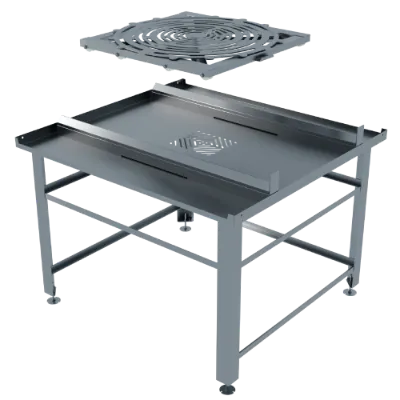
SKU AQAQUABLAST-ROTATING-PULL-OUT-TABLE
Rotating and pull-out table
Designed for heavy parts — roll the table out, load the part and slide it into the cabinet on rails. Rotate the part during cleaning using the built-in rotating base. Table and rotating platform included.
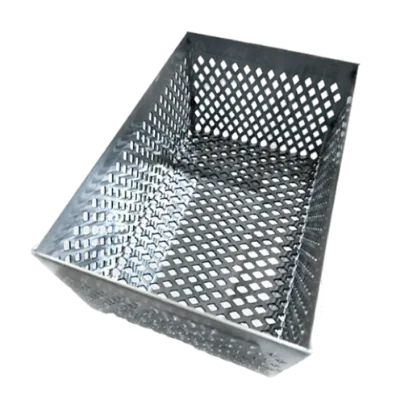
SKU AQAQUABLAST-SMALL-PARTS-BASKET
Small parts basket
Stainless steel basket for cleaning multiple small parts simultaneously — holds fasteners, connectors and small metal components in a single cycle.
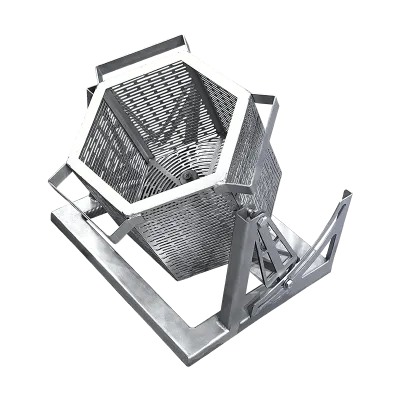
SKU AQAQUABLAST-SMALL-PARTS-DRUM
Small parts drum
Designed for bulk cleaning of small parts — a rotating drum with adjustable tilt angle handles connectors, fasteners and hardware without manual processing of each item.
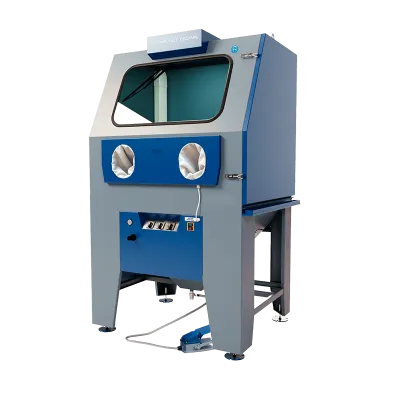
SKU AQAQUABLAST-STANDARD-1100
Aquablast STANDARD 1100 – universal wet blasting cabinet
Built for auto repair shops that demand professional results — handles engine blocks, cylinder heads and gearboxes without taking up too much space. Manufactured in Poland.