
Guide
Degreasing metal parts — four methods, and when to pick which
No surface treatment holds on a greasy face. Here is what degreasing really does, what decides the choice of chemistry and method, and where a workshop washer fits in.
If you read one thing
Degreasing removes oil, grease and dirt from metal before the part is painted, pickled, passivated or assembled. Skip it and the coating does not bond, and rust gets a start underneath. Three things decide the method: which metal the part is made of (aluminium tolerates only mild alkali, steel tolerates strong), what kind of oil is on it, and how dirty the part is. There are four main methods: spraying, dipping, steam and vibration. For workshops with a steady flow of parts, heated spraying in a closed machine is the most used — it takes oil and chips in the same pass. Always check the detergent data sheet for temperature and dosing.
Updated 11 September 2026
What degreasing is, and why it comes first
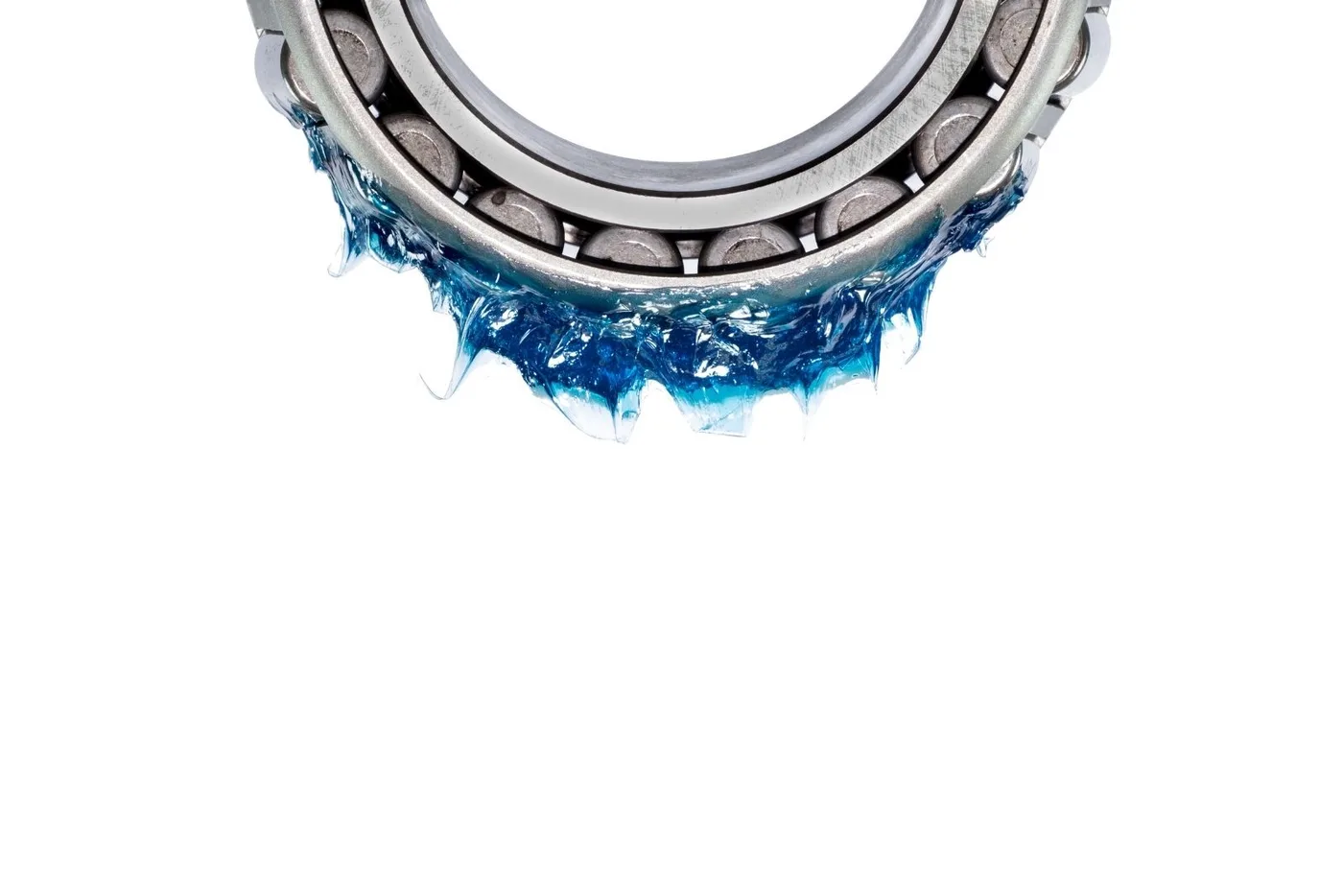
Degreasing is removing oil and grease from a metal surface with chemistry and physics together: an agent that dissolves or lifts the grease, and motion, heat or pressure that carries it away. It is not the same as making the part "clean enough to look at". The goal is a surface the next step can bond to.
That next step is almost always something that depends on contact with bare metal: paint and powder coating, pickling and passivation of stainless, phosphating, bonding, or simply assembling parts that are meant to stay put. All of these fail silently on a greasy surface. The coating looks fine out of the oven, and lets go six months later. The passivation goes patchy where the oil was. The adhesive holds in the lab and not on the part.
That is why degreasing comes first in any pretreatment — and why it is so often the step that gets the blame when something later goes wrong, without anyone checking whether it was done.
Three things that decide the method
1. The metal. Aluminium, zinc and brass do not tolerate strong alkali — the surface etches and turns dull or dark. They need a mildly alkaline or neutral agent. Steel and stainless tolerate stronger alkaline solutions, and often need them to shift dried-on oil. One and the same bath therefore does not suit everything that comes off the machines.
2. The oil. Thin coolant emulsion rinses off easily. Neat cutting oil is viscous and needs heat. Grease, wax and preservatives are worst, and need either time in a hot bath or mechanical help. If you know what was used in the machine, you know a lot about what it will take.
3. How dirty the part is. A light oil film is one thing. Oil with chips in it, soot from heat treatment or dried-on residue is another — then the degreasing also has to move solid particles, and the choice falls on a method with motion: spraying under pressure or a bath with circulation.
The four methods
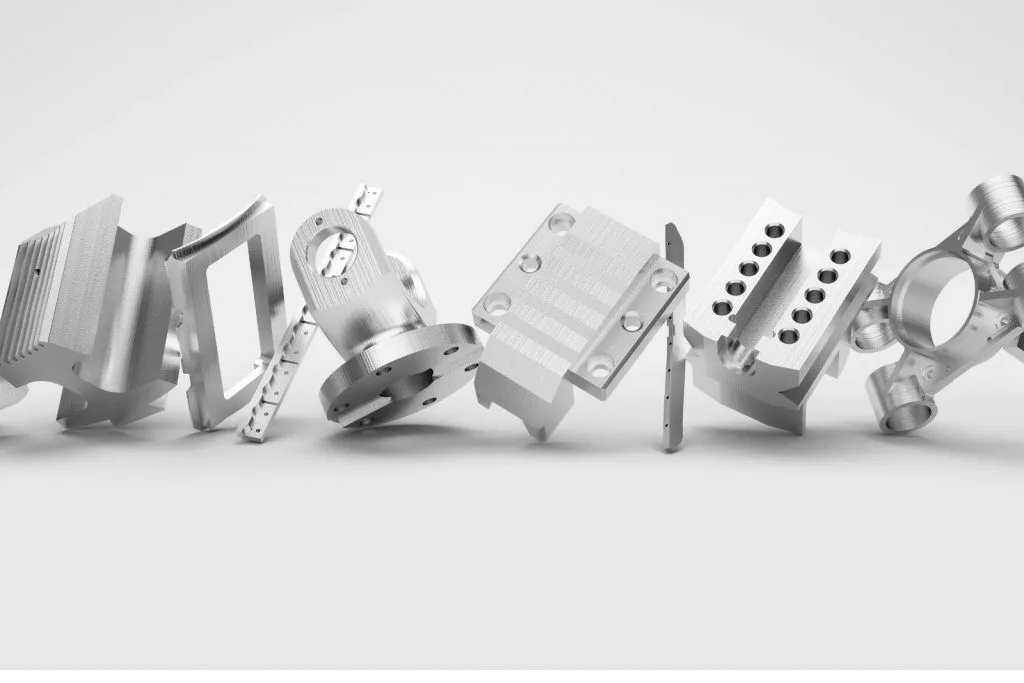
Spraying. Detergent is sprayed onto the part under pressure, from fixed nozzles in a machine or from a hand-held gun in a booth. The motion does the work: the jet lifts the grease and carries off chips and particles in the same pass. With hot water this is the most versatile method for the workshop, and the only one of the four that also removes solid residue. The drawback: the jet only reaches where it points. Parts with deep cavities have to be positioned right or turned.
Dipping. The part is lowered into a heated bath and left. Simple, and the bath reaches everywhere — into galleries and threads. The hotter the bath, the shorter the time needed. The drawback is that a still bath does not move particles; oil with chips in it settles on the bottom and the part can come up with residue on it. Circulation or ultrasound makes up for that.
Steam. Hot steam condenses on the part and runs off with light soiling. Gentle, little chemistry, and good for complex shapes. But only for light contamination — thick oil and grease defeat it.
Vibration. The part is set oscillating beyond the adhesion of the grease, so it shakes loose — with no chemicals. Interesting where emissions and waste are the problem. But the method removes what sits loose, not what has dried on, and it is not common in an ordinary workshop.
Chemistry, cost and waste
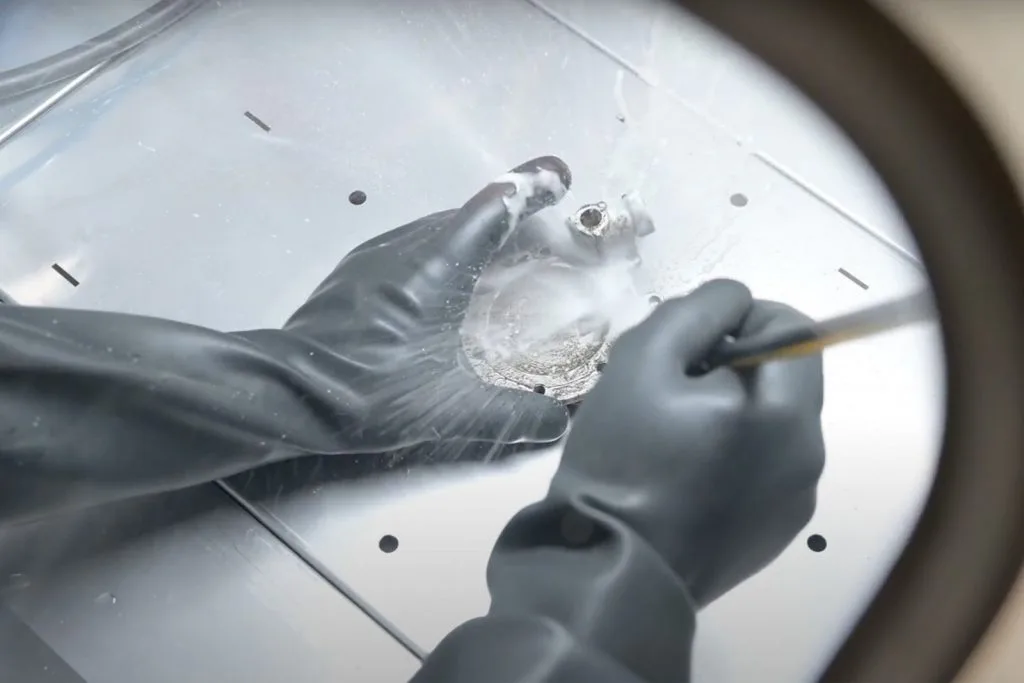
The detergent is not free, and neither is the spent detergent. A bath or tank becomes, over time, a mix of agent, oil, chips and dirt that has to be handled as waste — with packaging, transport and treatment. The cost depends on what chemistry it is, and how much of it.
Two things keep it down. Water-based agents instead of solvents: less to declare, less to ventilate, and the bath can be used longer. And separation along the way: an oil skimmer that takes the oil off the surface, and a strainer that catches the chips, let the same tank wash far more parts before it has to be emptied. That is the hidden economy of a closed washing machine — not the machine itself, but how rarely it has to be emptied.
Be honest about the limit at the same time: a water-based bath has a lifetime, and a tank that "still looks fine" can be finished. Set intervals for replacement, and keep to them.
Where a workshop washer fits in
The automatic parts washers we carry are hot-water spray machines: the parts sit in a rotating basket, heated water-based detergent is sprayed from fixed nozzles, and everything drains back to a tank with a strainer and provision for an oil skimmer. That is method one — spraying — packaged so it runs without an operator and gives the same result every time. Sizes run from bench model to machines that take several hundred kilos per basket.
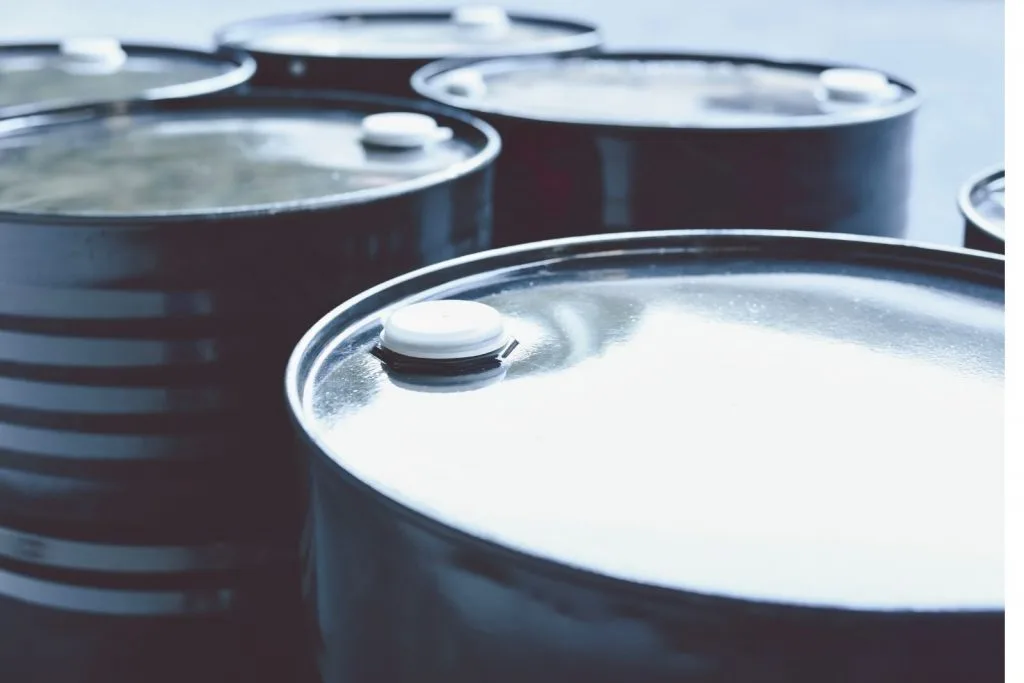
For drums and barrels there are dedicated machines that wash the inside of 30–250-litre drums, one or four at a time. And for those who need solvent instead of water — for parts that must not get wet, say — there is one air-driven model with a service drum.
What we do not carry today is steam plants, vibration degreasing and manual high-pressure booths. If your production needs those, we will say so.
Watch out for
Wrong agent on the wrong metal. The most common mistake. Strong alkali on aluminium gives a dull grey surface that does not come back. Read the agent's data sheet — it says which metals it is made for.
Rinsing. Detergent residue on the part is as bad as oil residue for what comes next. Rinse with clean water where the process requires it, and dry.
Flash rust. A degreased steel part is bare and wet. It can start rusting within hours. Dry it, and apply protection if it is not going straight on.
Cold bath. Almost every water-based agent is made to work hot. A bath below working temperature means longer time and a poorer result, and the temptation is to raise the dose instead of the temperature. Do not — follow the data sheet.
Parts shielding each other. In a basket or a bath: if the parts lie tight, the faces between them are never hit. Load in one layer, and turn parts with cavities so they drain.
Need help choosing a degreasing method?
Tell us which metal, which oil and how many parts are involved. Then we can say whether a closed washer is right for you — and which size.
Contact usThe equipment this is about
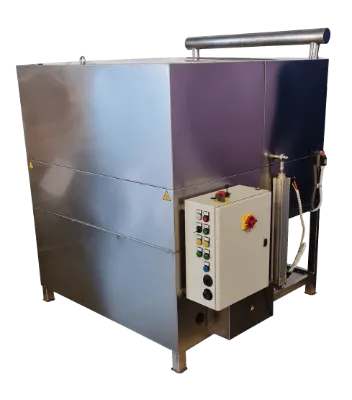
SKU GEIP400181
Automatic Parts Washer 1150 X
The Washer 1150 X is an automatic parts washer in AISI 304 stainless steel, designed for washing small and medium-sized parts using heated water-based detergent at a maximum temperature of 60 °C. It features an integrated heated detergent tank, a load capacity of 800 kg, and a rotary basket with washing ramps in AISI 304 stainless steel. Power supply is 400 V three-phase.
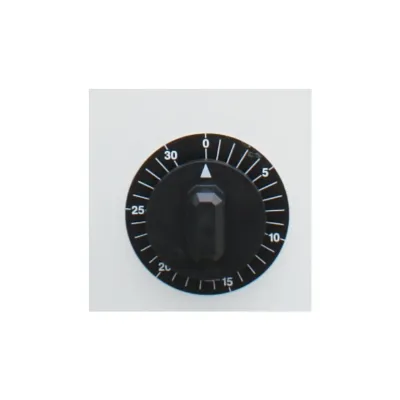
SKU GEIG0031
Complete Washer Timer
Complete replacement timer for Geicos automatic parts washers. Compatible with the following models: Washer 1150 E POWER, Washer EasyOne, Washer 900 E POWER, Washer Easy Four Pocket, Washer 1500 E POWER, Washer Up & Down 2000 Power, Washer Up & Down 1450 Power, Washer 60, Washer 1800 E POWER, Washer 750 E POWER, and Washer Easy Four.
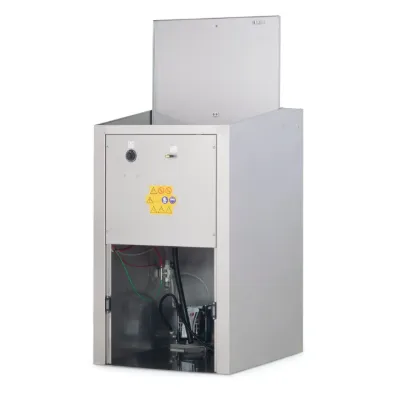
SKU GEIP300251
Top Tinwash Automatic Parts Washer
Top Tinwash is an automatic parts washer in AISI 304 stainless steel, designed for washing small and medium-sized parts using a solvent-based detergent. The machine uses a service drum with a load capacity of 50 kg and is pneumatically powered.
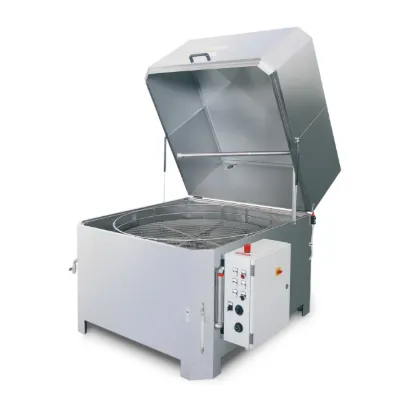
SKU GEIP400091
Washer 1150 E Power – Automatic Parts Washer
The Washer 1150 E Power is an automatic parts washer in AISI 304 stainless steel, designed for automatic washing of small and medium-sized parts. Washing is carried out with heated water-based detergent at a maximum temperature of 60 °C. The machine features an integrated heated detergent tank and a sustainable load of 400 kg. Power supply is 400 V three-phase. The rotary basket and washing ramps are made from AISI 304 steel.
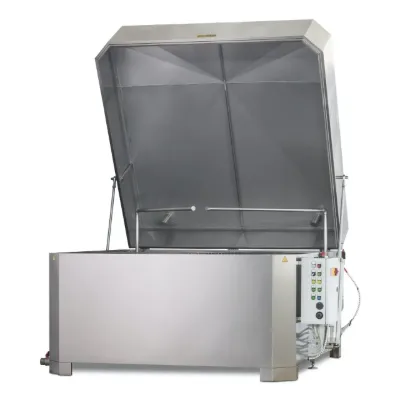
SKU GEIP400151
Washer 1800 E Power – automatic parts washer
The Washer 1800 E Power is an automatic parts washer in AISI 304 stainless steel, designed for washing large-sized parts. Washing is carried out with heated water-based detergent at a maximum temperature of 60 °C. The machine features an integrated heated detergent tank, a maximum load capacity of 400 kg, and a rotary basket with washing ramps in AISI 304 steel. Power supply: 400 V three-phase.
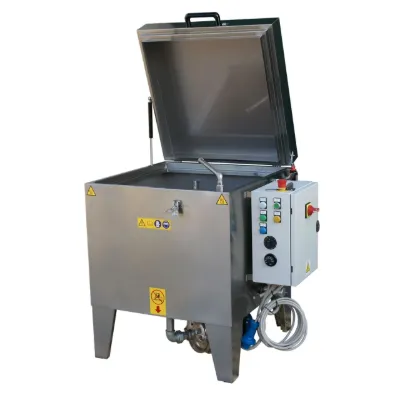
SKU GEIP400141
Washer 60 – Automatic Parts Washer
The Washer 60 is an automatic parts washer in AISI 304 stainless steel designed for automatic washing of small and medium-sized parts using heated water-based detergent, with a maximum temperature of 60 °C. It features an integrated heated detergent tank, a load capacity of 100 kg, 230 V mono-phase power supply, a rotary basket and washing ramps in AISI 304 steel.
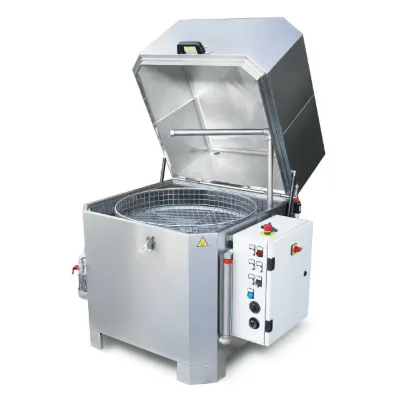
SKU GEIP400161
Washer 750 E Power – Automatic Parts Washer
The Washer 750 E Power is an automatic parts washer in AISI 304 stainless steel, designed for automatic washing of small and medium-sized parts using heated water-based detergent. Maximum temperature 60 °C. Integrated heated detergent tank with a sustainable load of 400 kg. The machine operates on a 400 V three-phase power supply and features a rotary basket and washing ramps in AISI 304 steel. Parts are washed by high-pressure water-based detergent.
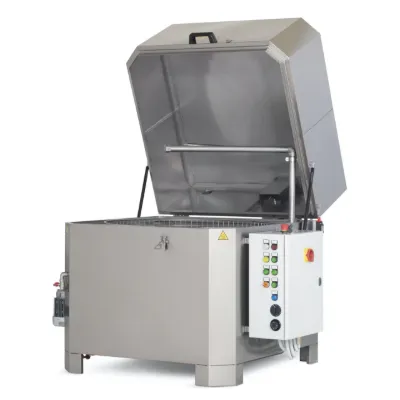
SKU GEIP400101
Washer 900 E Power – Automatic Parts Washer
The Washer 900 E Power is an automatic parts washer in AISI 304 stainless steel, designed for automatic washing of small and medium-sized parts using heated water-based detergent. Maximum working temperature is 60 °C. The machine features an integrated heated detergent tank and supports a load of up to 400 kg. Power supply is 400 V three-phase. The machine is equipped with a rotary basket and washing ramps in AISI 304 steel. Washing is performed at high pressure using water-based detergent.
SKU GEIP400201
Washer Easy Four Automatic Parts Washer
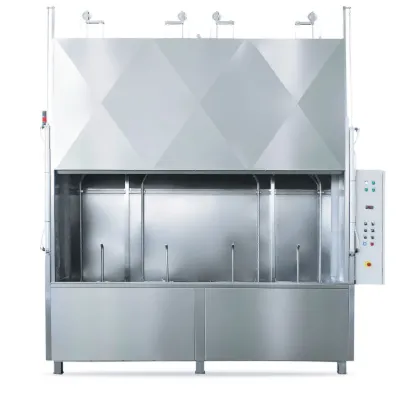
The Washer Easy Four is an automatic parts washer in AISI 304 stainless steel, designed for the automatic washing of four drums of different sizes simultaneously. Washing is carried out with heated water-based detergent at a maximum temperature of 60 °C. Integrated heated detergent tank. Washes drums from 30 up to 250 litres. 400 V three-phase power supply. Washing ramps in AISI 304 steel. Available in two variants (P40020.1 and P40020.2).
SKU GEIP400102
Washer Easy Four Pocket
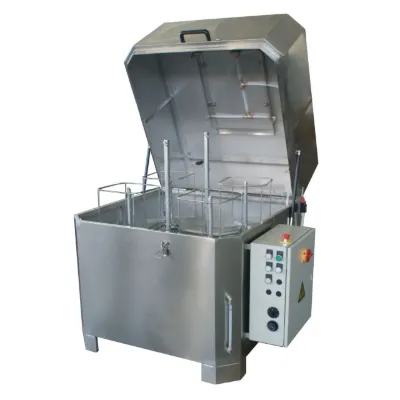
The Washer Easy Four Pocket is an automatic parts washer in AISI 304 stainless steel, designed for the simultaneous automatic washing of 4 tanks of different sizes. Washing is carried out with heated water-based detergent at a maximum temperature of 60 °C. The machine features an integrated heated detergent tank, 400 V three-phase power supply, and washing ramps in AISI 304 steel.
SKU GEIP400092
Washer EasyOne
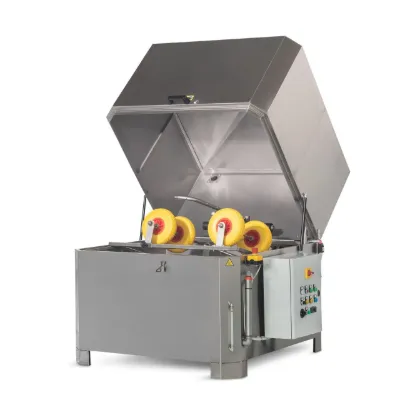
The Washer EasyOne is an automatic parts washer in AISI 304 stainless steel, designed for the automatic washing of one drum at a time in different sizes. Washing is performed with heated water-based detergent at a maximum temperature of 60 °C. Suitable for barrels from 30 up to 250 litres. The machine features an integrated heated detergent tank, rotary basket and washing ramps in AISI 304 steel. Power supply: 400 V three-phase.
SKU GEIP400132
Washer Up & Down 1450 Power
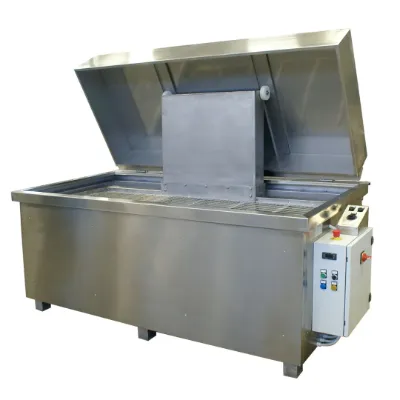
The Washer Up & Down 1450 Power is an automatic parts washer in AISI 304 stainless steel designed for automatic washing and shaking of small and medium-sized parts. Washing is carried out with heated water-based detergent at a maximum temperature of 70 °C. Integrated heated detergent tank. Sustainable load: 150 kg. 400V three-phase power supply. Rotary basket and washing ramps in AISI 304 steel.